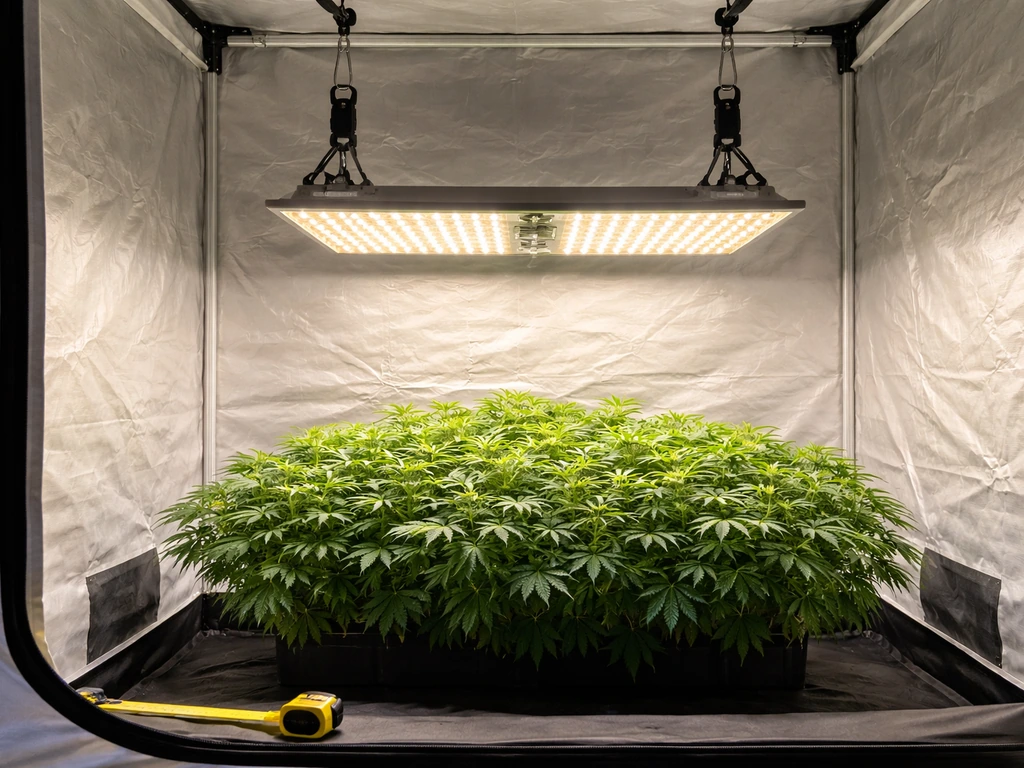
For most indoor plants, you want a full-spectrum LED panel sized to your footprint (a 100W to 200W quantum board covers a 2x4 ft area well), mounted 18 to 24 inches above the canopy for vegetative growth, running 16 hours on and 8 hours off for seedlings and most houseplants, or 12/12 for anything you want to flower. Start at the higher end of that distance range, dial closer only if plants stretch, and back off if you see bleaching or leaf curling. That combination handles 90% of the questions people ask on Reddit about grow light setups.
Grow Light Setup Reddit Guide: Fast Indoor Checklist
Marcus Tillman
6 May 2026
What people actually mean by "grow light setup" on Reddit
When you search Reddit for grow light help, you land in two very different conversations. Beginners are asking "what light do I even buy and where do I put it?" They want a starting point, something that will not kill their seedlings or burn their pothos. Intermediate growers are asking more specific things: why are my plants stretching, is 18/6 or 24/0 better, how do I daisy chain two lights on one timer without messing up the dark cycle? Both groups are dealing with real problems, just at different levels of detail.
The good news is that the same core setup covers both. Once you understand the four variables (light type, mounting height, intensity, and schedule) and how they interact, most Reddit grow light threads start making sense. You stop guessing and start adjusting deliberately. This guide walks through each variable in order so you can set up correctly from day one, or fix what is not working right now.
Choosing the right light type and size for your space
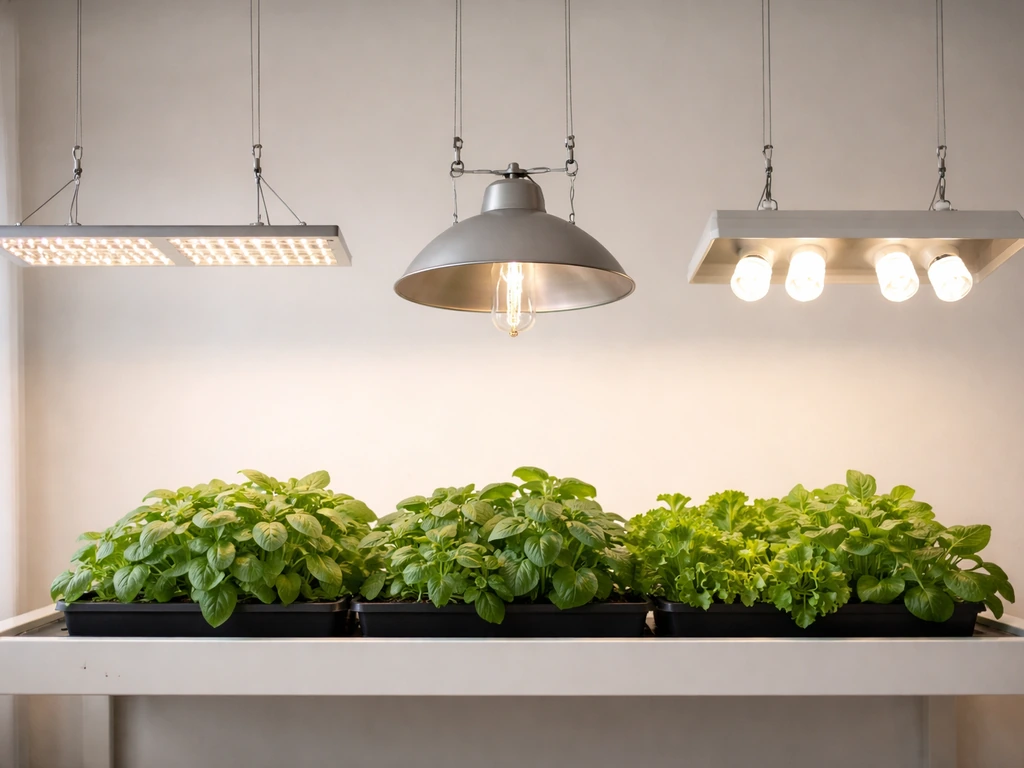
Full-spectrum LEDs are the right choice for almost every indoor setup in 2026. They run cooler than HID or fluorescent, use less electricity, and the better ones (quantum boards or bar-style panels) produce a spread of light that actually matches what plants use for photosynthesis. Avoid the cheap "blurple" purple LED panels unless you are on an extremely tight budget and growing low-light plants. They are not useless, but full-spectrum panels give you noticeably better results and the Reddit consensus has shifted hard in that direction.
Size the light to your grow footprint, not your pot size. A rough guide: a 45W to 65W full-spectrum LED covers a 2x2 ft area for vegetative growth. A 100W to 200W panel covers a 2x4 ft area. For a single shelf or a small 4x4 ft tent, a 400W to 600W unit is appropriate. If you are growing low-light houseplants like pothos, snake plants, or peace lilies, you can get away with smaller clip-on grow bulbs or a modest bar light because those plants tolerate lower PPFD (light intensity). If you are growing tomatoes, peppers, or anything that fruits, you need significantly more output because sun-loving plants need much higher light levels to actually produce.
| Grow Space | Recommended Wattage (true draw) | Best Light Type |
|---|---|---|
| Single shelf / 1x2 ft | 20-45W | Bar light or T5 strip |
| 2x2 ft tent or corner | 45-65W | Quantum board or bar panel |
| 2x4 ft space | 100-200W | Quantum board |
| 4x4 ft tent | 400-600W | Full-spectrum LED panel or bars |
| Low-light houseplants | 10-20W per plant zone | Clip-on or small grow bulb |
One thing worth flagging: when you see wattage listed for LEDs, the number on the box is often inflated marketing. Look for "true draw" or "actual power consumption" in the specs. A light advertised as "1000W equivalent" might only draw 100W from the wall, which is what actually matters for sizing your space and planning your electric load.
Placement, mounting height, and whether you need a reflector
Mounting height is the most common setup question in Reddit grow light threads, and for good reason. Get it wrong in either direction and your plants either stretch toward the light (too far) or bleach and curl from intensity (too close). The general starting points for a mid-range full-spectrum LED are: 20 to 24 inches above seedlings, 18 to 24 inches for vegetative growth, and 12 to 18 inches for flowering and fruiting plants. These are starting points, not rules set in stone. You adjust from here based on what the plants tell you.
Center the light directly above the plant canopy. Hanging it off to one side is a setup mistake that almost guarantees uneven growth. If you are covering a larger area, use multiple fixtures spaced evenly rather than one light on one end. For most home setups, a grow tent with a hanging kit or an adjustable rope ratchet makes height changes easy, which you will want because the optimal distance changes as plants grow taller.
Reflective walls help a lot in enclosed spaces. If you are in a grow tent, the Mylar lining is already doing this work. If you are on an open shelf, white walls or a piece of white foam board behind the plants bounces light back into the canopy instead of losing it to the room. Diffusers (frosted covers over the light) can soften hotspots if you see uneven bright patches on your canopy, but most modern full-spectrum panels spread light well enough that a diffuser is optional rather than necessary.
Dialing in intensity: PPFD and DLI without the headache
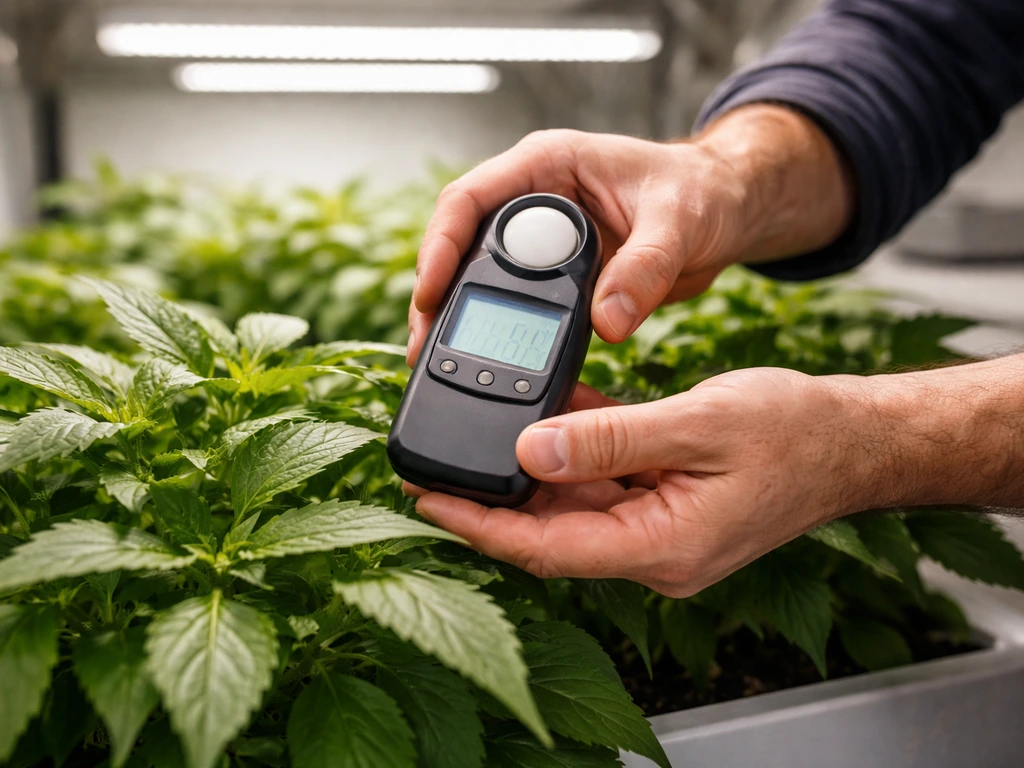
You do not need to obsess over PPFD (photosynthetic photon flux density) numbers to grow healthy plants, but understanding the concept helps you troubleshoot. PPFD measures how much usable light actually hits your plant canopy per second. The key insight from Reddit threads is that distance changes PPFD dramatically. A light producing 151 μmol/m²/s at 6 inches drops to around 83 μmol/m²/s at 12 inches. Doubling the distance roughly quarters the intensity, which is why mounting height matters so much.
DLI (daily light integral) is just the total amount of light your plant receives over a full day, calculated from PPFD and photoperiod hours. DLI is commonly estimated from PPFD for a constant-intensity photoperiod using DLI ≈ PPFD × 86,400 / 1,000,000.
A rough rule: seedlings do well at 150 to 200 μmol/m²/s PPFD, which works out to about 10 DLI over an 18-hour day. Vegetative plants want 400 to 600 μmol/m²/s. Fruiting and flowering plants push 600 to 900 μmol/m²/s or higher. If your light has a dimmer (and many do), use it.
Start at 50 to 60% intensity for seedlings and ramp up as the plants mature. If your light does not have a dimmer, use height to control intensity instead.
- Seedlings: 150-200 μmol/m²/s PPFD, light 20-24 inches above canopy
- Vegetative plants: 400-600 μmol/m²/s PPFD, light 18-24 inches above canopy
- Flowering/fruiting plants: 600-900 μmol/m²/s PPFD, light 12-18 inches above canopy
- Low-light houseplants: 50-150 μmol/m²/s PPFD is usually plenty
You do not need a PAR meter to get close. Most manufacturers publish a PPFD map for their lights at different heights. Use that as your starting point, then watch the plants for signs of too much or too little light, which the troubleshooting section below covers in detail.
Timers, schedules, and how long to run lights at each stage
A mechanical outlet timer is one of the most important parts of your setup and also one of the cheapest. A mechanical timer is a core part of any grow lamp setup, so it is a good place to start before you fine-tune height and intensity. Do not try to manually switch lights on and off every day. Inconsistent light schedules stress plants and cause problems that look like nutrient deficiencies or disease when they are actually just timing issues.
The 24/0 (lights on all the time) debate comes up constantly in Reddit threads. For most plants, it is not ideal. Photoperiod plants specifically need a dark period, and running lights 24 hours tends to cause stretching in seedlings rather than preventing it. The stretch happens because plants in continuous light are not getting the environmental cue to compact and thicken. An 18/6 schedule (18 hours on, 6 hours off) is the most universally recommended starting point for seedlings and vegetative growth. For flowering and fruiting, switch to 12/12.
| Plant Stage | Recommended Schedule | Notes |
|---|---|---|
| Seedlings | 16/8 or 18/6 | Dark period prevents stretching; 18/6 is the Reddit consensus |
| Vegetative growth | 18/6 | Maximum growth without stressing photoperiod plants |
| Flowering / fruiting | 12/12 | Triggers bloom in photoperiod plants; suits fruiting vegetables |
| Low-light houseplants | 12/14 or 14/10 | These plants do not need as many hours; mimic natural day length |
| Auto-flowering plants | 18/6 or 20/4 | Not photoperiod sensitive, but still benefit from a dark period |
Set your timer to run lights during the day or early evening so the dark period falls at night. It does not technically matter to the plant when the "day" starts, but it keeps your grow room cooler during the hottest part of the day if you schedule the dark period at midday in a hot climate. If you are running two or more lights, plug them all into the same timer or power strip that is connected to one timer. A separate Reddit thread shows exactly what goes wrong when you daisy chain lights improperly: the night cycle shifts unexpectedly and your plants get confused. Keep it simple with one timer controlling everything if possible.
Wiring, heat, ventilation, and setup mistakes to avoid
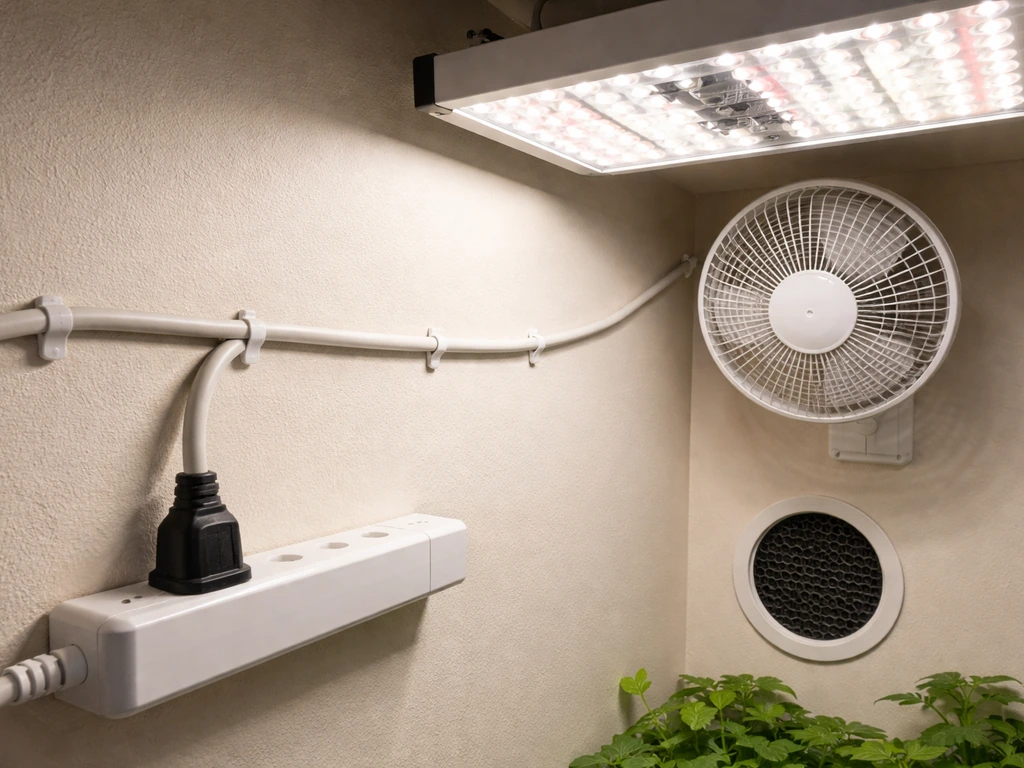
Electrical safety is not optional. Grow lights pull real amperage and they run for 12 to 18 hours a day. A few rules that come up repeatedly in Reddit safety discussions: always use a properly grounded three-prong outlet with a three-prong timer. Do not use a 3-to-2 prong adapter to plug a grounded grow light into an ungrounded outlet. That removes the safety ground and creates a real shock and fire risk. If you are using a smart plug plus a mechanical timer for extra scheduling control, make sure both are rated for the wattage you are running. Check the combined wattage of everything plugged into a power strip before switching it all on.
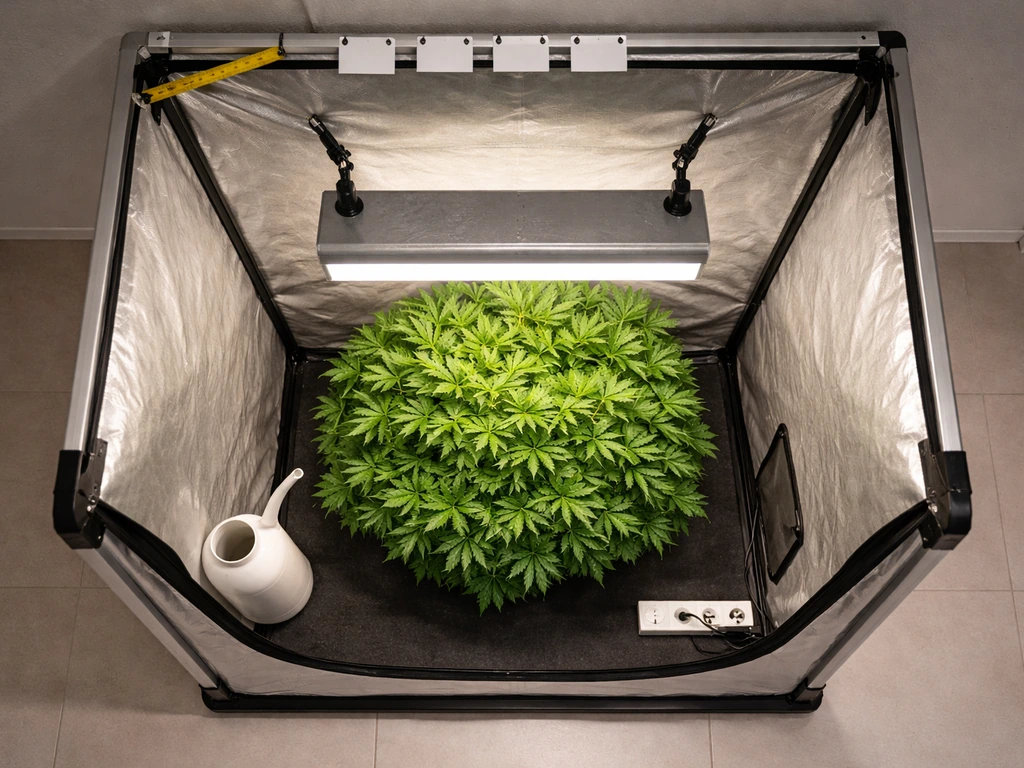
Heat is the other major issue, especially with larger lights in enclosed spaces. LEDs run cooler than HID lights but they still generate heat, and in a grow tent that heat builds up fast. You need airflow: an inline fan pulling air out of the tent, and passive intake holes or a second fan pushing fresh air in. Gorilla Grow Tent recommends [ventilation via an inline/exhaust approach, such as exhausting hot air through the top port](https://www.
gorillagrowtent. com/blogs/news/do-i-need-a-fan-in-my-grow-tent), to manage heat and humidity in an enclosed grow tent. Without airflow, temperatures above the canopy can climb high enough to stress plants even if the light intensity itself is correct. A simple temperature/humidity gauge inside the tent tells you immediately if ventilation is inadequate.
Keep power strips and timer plugs off the floor and away from water sources. Watering plants with electrical cords running at floor level is how accidents happen. Use velcro cable ties to route cords up and away from irrigation areas. Hang your light with proper ratchet hangers rated to the fixture weight, not string or zip ties. If your light drops onto wet soil, you have a serious problem.
- Use a grounded three-prong timer, never a 2-prong adapter with a grounded fixture
- Check wattage ratings on power strips before plugging in multiple lights
- Keep all electrical connections above and away from water
- Install an inline fan or oscillating fan to manage heat buildup
- Use ratchet rope hangers, not string, to mount fixtures
- Put a thermometer inside your grow space and check it for the first few days
Troubleshooting: what the plants are telling you
Once the setup is running, the plants give you constant feedback. Here is how to read the most common symptoms and what to adjust.
Stretching and leggy growth
If your seedlings are tall, spindly, and falling over, the light is too far away or not strong enough. This is the single most common complaint in grow light threads on Reddit and the fix is almost always the same: move the light closer. Drop from 24 inches to 18 inches first and watch for improvement over 2 to 3 days. If you are already close and still seeing stretch, your light may genuinely be underpowered for the space. Running lights 24 hours to compensate does not fix the underlying problem and often makes stretching worse, so do not go that route.
Bleaching, white patches, or "tanning" at the tops
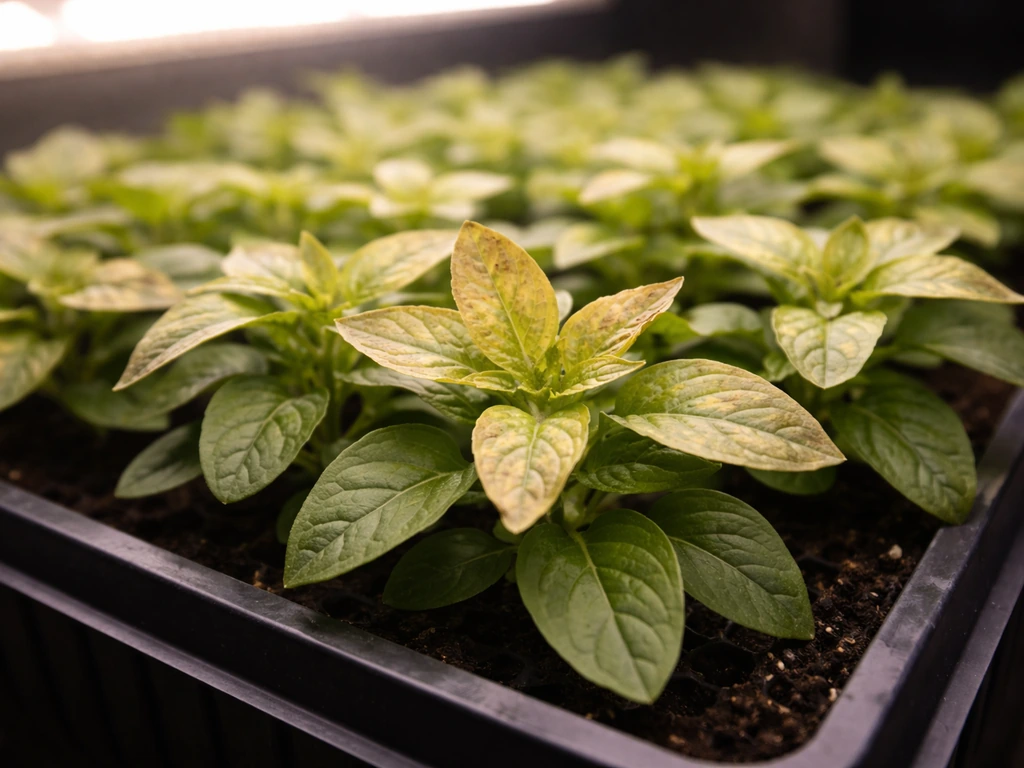
White or yellow patches appearing only on the uppermost leaves closest to the light mean the light is too close or running at too high an intensity. This is light bleaching and it is distinct from a nutrient deficiency because it only affects the top of the canopy, not lower or older leaves. The fix is simple: raise the light 2 to 4 inches and reduce intensity if your fixture has a dimmer. Do not panic and raise it by a foot all at once or you will swing back toward stretching.
Leaf canoeing or curling upward
Leaves that curl up at the edges into a taco or canoe shape can be light stress or heat stress, and sometimes both at once. Check the temperature at canopy level first. If it is above 85°F (30°C), improve ventilation before adjusting the light. If temperature is fine, the canopy is likely getting too much light intensity. Raise the light slightly or dim it down.
Slow or stunted growth
If the plant looks healthy but is just not growing, the most likely cause is insufficient light hours or insufficient intensity, especially if you are growing fruiting or flowering plants. Check your timer is actually functioning and the schedule is running correctly. Then reconsider whether your light is genuinely powerful enough for the plant type. Low-light houseplants on a small LED are fine; tomatoes under a 45W panel in a 2x4 space are going to underperform regardless of your schedule.
Uneven canopy, some plants thriving and some struggling
This one points to placement rather than intensity settings. The plants in the center of the light footprint are getting more PPFD than the ones at the edges. Either move plants toward the center, rotate them regularly, or add a second light to cover the edges. Reflective walls help here too by bouncing light back into the outer zones of your grow area.
Your practical setup checklist
Before you turn on the lights for the first time, run through this list. It covers the mistakes that generate the most Reddit troubleshooting posts and the ones that are cheapest to prevent rather than fix later.
- Size your light to your actual grow footprint using true watt draw, not marketing wattage
- Choose a full-spectrum LED (quantum board or bar style) for most plant types
- Hang the light centered above the canopy using ratchet rope hangers
- Set starting height: 20-24 inches for seedlings, 18-24 for veg, 12-18 for flower
- Plug everything into a grounded three-prong mechanical or digital timer
- Set your schedule: 18/6 for seedlings and veg, 12/12 for flowering
- Route all electrical cords up and away from soil and water
- Install a fan or inline ventilation to prevent heat buildup
- Place a thermometer at canopy level and check it after 24 hours of running
- Watch plants for 3 to 5 days and adjust height or intensity based on symptoms
If you are building a shelf-based setup rather than a tent, or working with a strict budget, the same principles apply with slight adjustments to fixture choice and mounting. A budget grow light setup also comes down to choosing the right wattage range for your footprint and dialing the height and schedule to match the plant stage. A grow light shelf setup uses fixed rack heights, which means you control intensity mostly through dimming rather than height. Budget setups often mean trading some efficiency for upfront cost, but the schedule and placement rules stay the same regardless of what you paid for the fixture. Getting those fundamentals right matters more than the brand name on the box.
FAQ
How do I fine-tune intensity if my plants are in between “too much” and “too little” light? (Bleaching vs stretching)
If your light has a dimmer, dimming is usually safer than guessing new hanging height because it changes intensity without changing spread. If there is no dimmer, change height in small steps (2 to 4 inches), then wait 2 to 3 days since new leaf growth lags behind quick adjustments.
What wattage number should I trust when shopping for grow light setups, the box “equivalent” rating or the actual watts?
Start with the manufacturer’s listed “true draw” watts (actual power consumption) and size from the grow footprint, not the pot size. If you see ambiguous listings like “1000W equivalent,” treat it as marketing and use the real wattage for both spacing and electrical planning.
Can I run one timer for multiple grow lights if they’re at different heights or aimed at different plants?
Avoid mixing schedules unless you have separate control for each photoperiod group. If you must run multiple lights, keep the entire grow room on one timer for the same day/night cycle, then adjust intensity per shelf or plant with dimmers or separate height.
Is it okay to change the photoperiod during germination or seedling stage?
Yes, but only if you maintain a consistent dark period for photoperiod-sensitive plants (most flowering and fruiting types). For germination, you can use a shorter initial ramp (for example 16 to 18 hours) but do not switch back and forth daily, the stable on/off rhythm matters.
My plants look fine in the middle but the edges are weaker, what’s the best fix for an uneven light footprint?
If you have uneven lighting across the canopy, first rotate plants 1/4 turn every couple of days so each side gets similar exposure. Next, correct the fixture position (center over canopy, add a second light for larger areas). Only then consider diffusers, since a diffuser can reduce peak intensity slightly.
Should I add a diffuser to fix bright hotspots or uneven growth at the top of my canopy?
A diffuser can help if you see harsh hotspots, but it is not a cure for insufficient coverage. If the edges are dim, add coverage (another fixture or better placement) rather than relying on a diffuser to “create” light where your fixture cannot reach.
How can I tell whether leaf curling is from heat stress or light stress?
Measure temperature and humidity at canopy height, not near the top of the tent. If canopy temperature is high, improve exhaust and intake first. If canopy temperature is normal and you still see curling, then adjust light intensity (raise 2 to 4 inches or dim).
What are the most common “it’s not growing” causes besides the light being too weak?
If you are seeing healthy growth but slower than expected, check two practical things before changing equipment: confirm the timer is actually switching (test it by manually verifying plug-on times), and verify the schedule is starting in the middle of the light “day” you want (so the dark period does not accidentally drift).
Could my grow light setup be blamed if my plants are yellowing or wilting, even when the light seems correct?
Overwatering and root issues often look like slow growth, but they are not solved by lowering the light. If plants wilt after watering or keep yellowing from the bottom up, inspect soil moisture, drainage, and pot airflow first, then fine-tune light after you know the roots are healthy.
Any practical electrical safety checks I should do beyond “use a grounded outlet” when setting up grow lights?
For safety and consistent performance, use a grounded timer and grounded outlets, and keep connections off wet floors. Also verify your power strip and timer are rated for the combined load, then leave slack in cords so you are not pulling on the outlet when you adjust height.
What should I do if I already started with 24/0 and my plants are stretching?
If you accidentally run 24/0, expect slower overall compact growth over time rather than immediate plant death. The fastest fix is to switch back to a proper dark cycle (for example 18/6 for seedlings and vegetative plants, 12/12 for flowering), then adjust height because stretched plants may now need slightly closer positioning.
How do I choose between two LED panels that have similar watts but different brands, without a PPFD meter?
Do not rely on wattage alone to predict performance, because diode efficiency and optics vary a lot. Use dimming and placement adjustments to get you close, and use the manufacturer’s PPFD map at your mounting height if available to confirm you are in the right range for your plant stage.
Next Article
Grow Lamp Setup Guide: Install, Adjust, Troubleshoot
Step-by-step grow lamp setup: choose light, mount and adjust height, set timers, and fix stretching, hotspots, and uneve