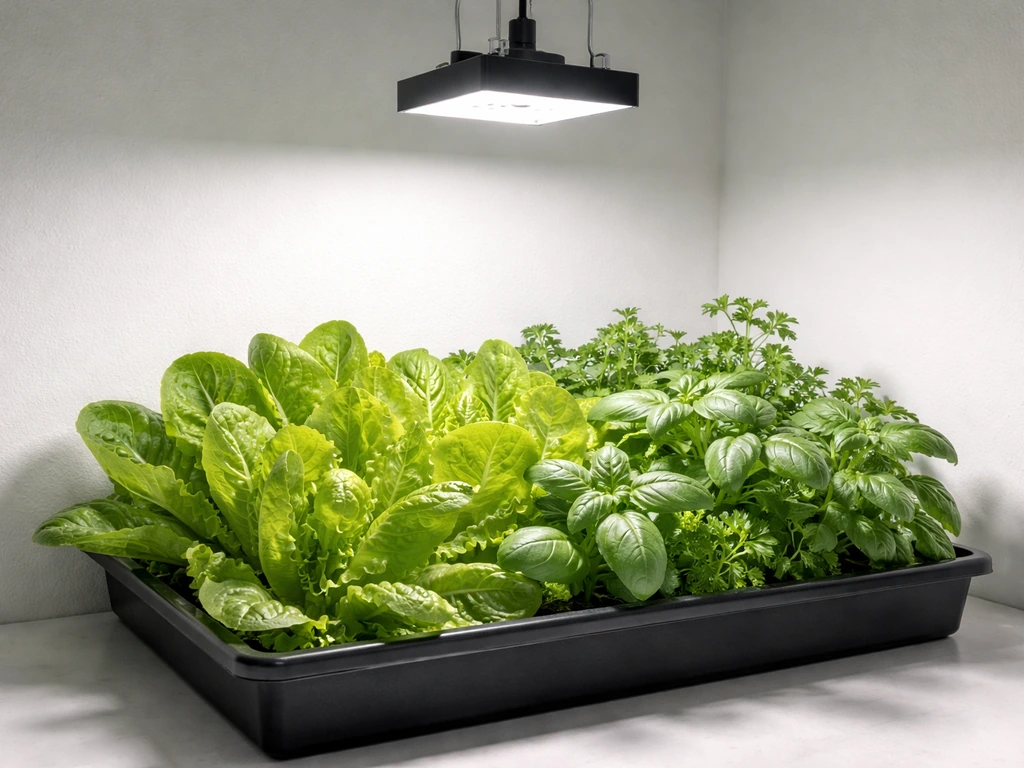
For most indoor plants with little or no natural sunlight, run your grow light for 14 to 16 hours per day. That single number covers the majority of home setups and gives you a solid starting point today. If your plants sit near a bright window and get a few hours of real sun, you can drop closer to 10 to 12 hours of supplemental light. If they're in a dim interior room with zero natural light, bump up toward 16 to 18 hours. The important thing is to pick a number, set a timer, and then watch how your plants respond over the next one to two weeks before changing anything.
How Often to Use a Grow Light: Daily Schedules
Marcus Tillman
17 Apr 2026
What the research actually says about daily hours
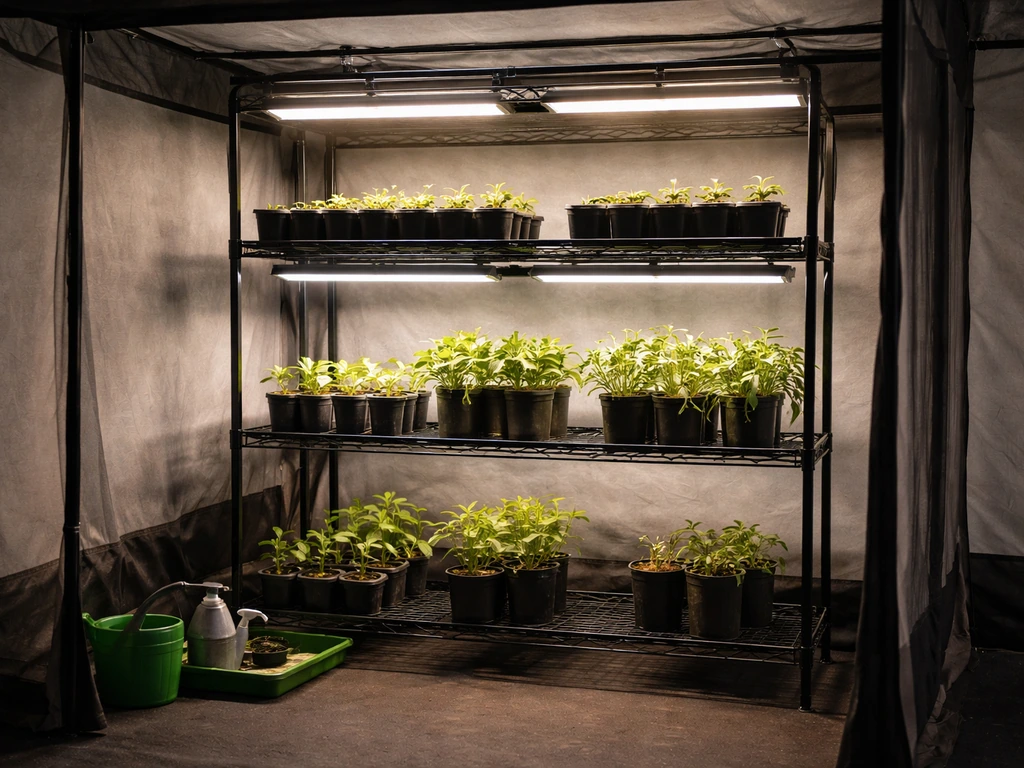
University extension programs give slightly different ranges depending on the context. Missouri University Extension recommends 16 to 18 hours per day when indoor plants receive no outdoor light at all. Missouri University Extension recommends 16 to 18 hours per day when plants receive no outdoor light at all. Iowa State University Extension takes a slightly more conservative approach and says 10 to 16 hours per day is the practical window for supplemental home lighting. The difference comes down to whether you're doing full replacement lighting (no windows, no sun) or just supplementing natural light that isn't quite enough on its own.
The deeper principle behind all of these numbers is something called blank" rel="noopener noreferrer">Daily Light Integral (DLI), which measures the total amount of plant-usable light your plants receive over a full day. DLI combines intensity (measured in PPFD, or micromoles per square meter per second) and duration. That means hours alone don't tell the whole story. A weak fixture running 18 hours might deliver less usable light than a strong one running 12.
If you want to get more precise, a PAR or PPFD meter is the tool to use, since fixture wattage alone doesn't tell you what your plants are actually getting at canopy level. For most beginners, though, starting with 14 to 16 hours and adjusting based on how your plants look is perfectly workable.
Choose your schedule based on plant type and growth stage
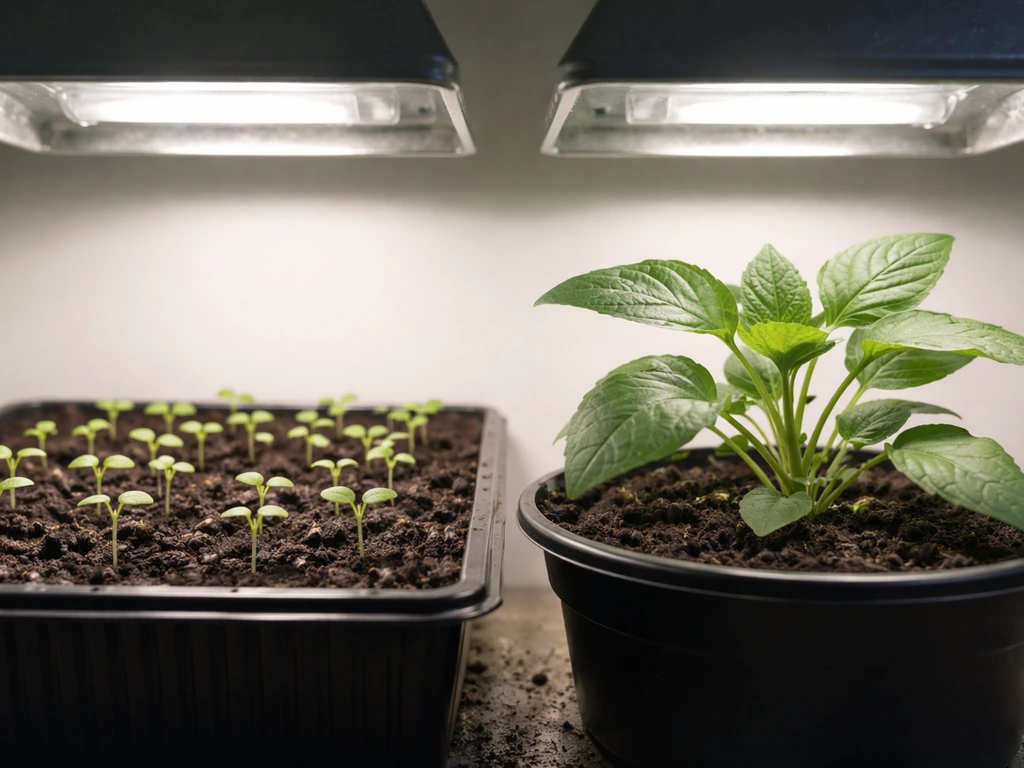
Not every plant needs the same schedule, and the same plant needs different things at different stages of its life. A seedling pushing its first true leaves needs more light than a mature pothos sitting on a shelf. A tomato plant setting fruit needs a completely different photoperiod than a cannabis plant in flower. Getting this right makes a bigger difference than almost any other variable.
Seedlings and young starts
Seedlings are the one case where more light is almost always better (within reason). The most common mistake with seedlings is not running the light long enough, or keeping the fixture too far away, which causes them to stretch upward looking for light. That leggy, weak-stemmed look is a classic sign of under-lighting.
Run your grow light 14 to 16 hours per day for seedlings, with the fixture positioned close (as little as 2 to 4 inches for fluorescents, 12 to 24 inches for most LEDs depending on wattage). Interestingly, at very close distances with lower-output fixtures, some extension resources show seedlings may need up to 22 hours to hit an ideal DLI, which shows just how much fixture output and distance interact with hours.
Vegetative and leafy plants
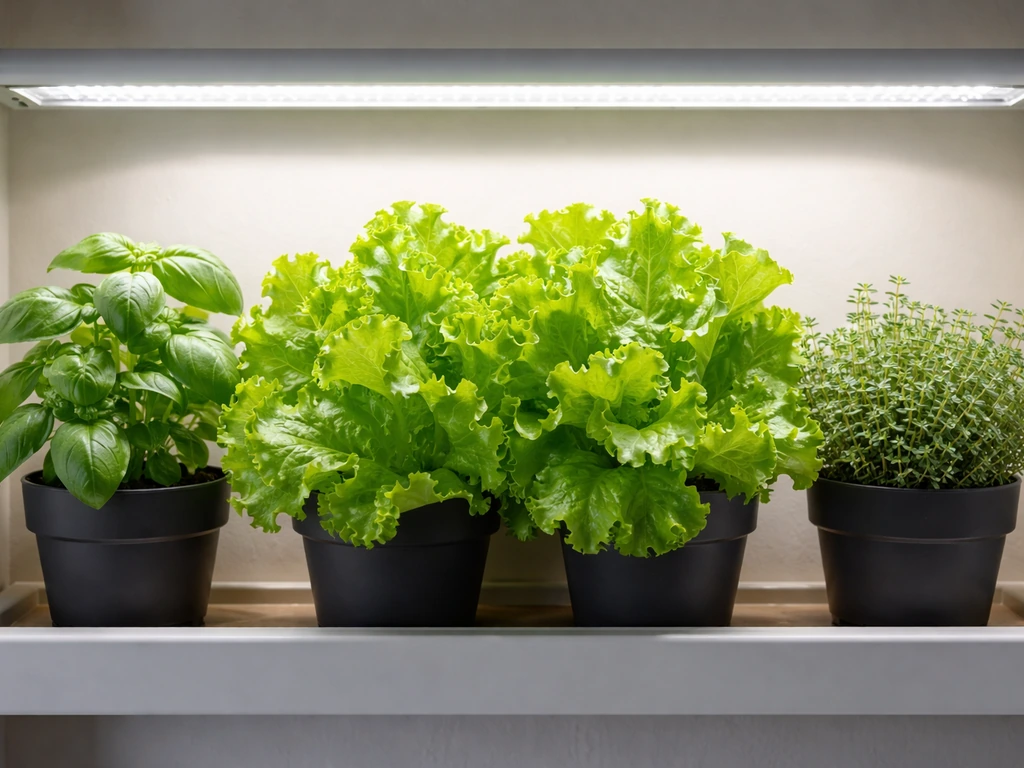
Plants in active vegetative growth, like herbs, lettuce, and houseplants you're trying to keep thriving, do well in the 14 to 18 hour range. If you're growing herbs indoors, using a grow light for vegetables and herbs follows the same principle: longer days encourage leafy, compact growth, while too little light leads to pale, sparse foliage. Keep dark periods consistent at 6 to 10 hours so the plant can rest and run its normal metabolic processes.
Flowering and fruiting plants
This is where photoperiod sensitivity becomes critical. Short-day plants (like chrysanthemums, strawberries, and many cannabis strains) need 10 to 12 hours of light per day to trigger and maintain flowering. Running them on an 18-hour schedule will actually prevent them from flowering at all, because they interpret the long day as summer and stay in vegetative mode. Long-day plants work the opposite way and need 14 to 18 hours to bloom. If you're not sure which category your plant falls into, check the seed packet or species description. For photoperiod-sensitive crops, precision matters, and even brief light leaks during the dark period can throw off the flowering cycle, which is exactly why a reliable timer is non-negotiable.
Set your light intensity: distance, power, and coverage
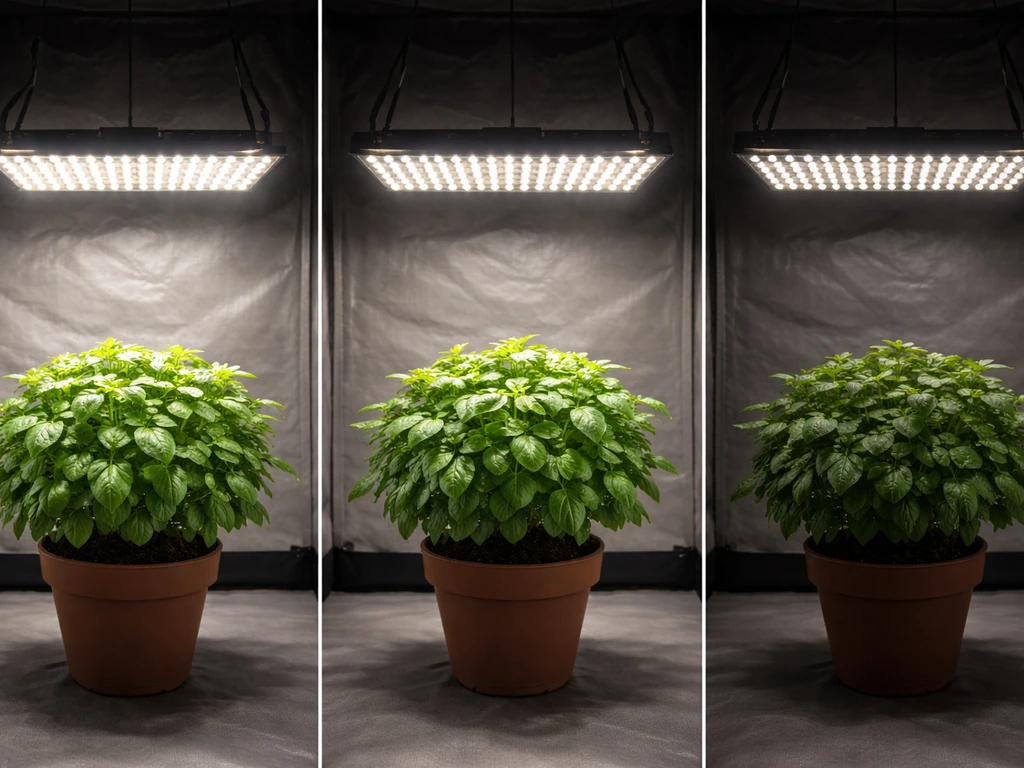
How long you run your light and how intense that light is at the plant canopy are two sides of the same equation. You can't optimize one without thinking about the other. Light intensity follows the inverse-square law, meaning if you double the distance between your fixture and your plant, the intensity at the canopy drops to roughly one quarter of what it was. That's a dramatic change, and it's why hanging height matters so much.
As a practical guideline: fluorescent tubes work best 2 to 4 inches above plants for seedlings and 4 to 6 inches for established plants. Mid-range LED panels (100 to 300 watts) typically perform well at 12 to 24 inches depending on the plant's light requirements.
For example, UNH Extension notes that a tested LED “light bar” may need 8 hours per day when mounted about 8 inches above the crop, but 16 hours per day if mounted about 20 inches above the crop a tested LED “light bar” would require 8 hours/day at 8" above the crop but 16 hours/day if mounted 20" above the crop. .
High-intensity LEDs or HID fixtures need more distance, often 18 to 36 inches, to avoid bleaching or heat stress. Moving the fixture closer increases your effective DLI, so if your plants are getting enough hours but still look starved for light, try reducing the distance before automatically adding more run time. Coverage matters too: make sure the usable light footprint covers your entire plant canopy, not just the center directly below the fixture.
If you have a dimmable LED, use it. Running a high-output fixture at 50 to 75 percent and positioning it at a moderate height gives you more even coverage and a more forgiving setup than blasting plants at full power from 8 inches away. Using a full spectrum grow light on a consistent schedule is most effective when you're also dialing in the right height and intensity, not just setting a timer and walking away.
Use timers and avoid common scheduling mistakes
A mechanical or digital outlet timer is one of the cheapest and most impactful things you can add to your grow setup. Consistent light cycles are genuinely important for plant health. Manually switching lights on and off every day leads to inconsistency, and even a couple of hours of variation can throw off photoperiod-sensitive plants. A basic mechanical timer costs a few dollars and is well worth it.
One important but often overlooked point from extension guidance: if you're supplementing natural daylight, running the grow light at the beginning or end of the day (extending dawn and dusk) is generally more effective than running it during peak daylight hours when natural light is already sufficient. Think of it as filling in the gaps rather than competing with the sun. How you hang your grow lights and set up the schedule together determines whether you're getting the most out of your fixture.
The most common scheduling mistakes to avoid are listed below. These show up constantly in beginner setups and are easy to fix once you know what to look for.
- Running lights 24 hours a day, thinking more is always better (most plants need a dark period for healthy development)
- Leaving the light on inconsistent schedules without a timer
- Keeping the fixture too far away and then running it extra hours to compensate, without realizing the intensity is still too low
- Using a schedule designed for one plant type on a completely different species (a flowering plant schedule on seedlings, for example)
- Ignoring natural light contributions and over-lighting plants that sit near a bright window
Read your plants: signs you need to adjust
Your plants will tell you whether the current schedule is working. You just have to know what to look for. Leggy, stretched growth with long gaps between leaf nodes is the most classic sign of not enough light, either too few hours or too much distance. Pale or yellowing leaves (assuming nutrients are fine) also point to under-lighting. If growth is just very slow across the board and the plant looks generally weak, more daily light hours or a shorter fixture distance is usually the right fix.
On the other end, bleached or washed-out patches on the leaves closest to the light, brown leaf tips, or curling and crisping edges suggest the plant is getting too much intensity, usually from the fixture being too close rather than from too many hours. Reduce the distance first, then consider trimming back run time if symptoms persist. Wilting during the light period (when the medium isn't dry) can also be a heat or intensity issue. Understanding how long to run your grow light goes hand in hand with recognizing these physical cues, because the right duration is always the one your specific plants respond well to.
One thing that trips up a lot of new growers: when you move a plant from low-light conditions to a new grow light setup, don't start at full intensity and full hours immediately. Give plants a few days at reduced hours or greater distance to acclimate, similar to hardening off seedlings before transplanting outdoors. Sudden increases in light exposure cause stress even when the light level itself is appropriate for the species.
Starter schedules for common indoor setups
Here are concrete starting points for the most common home growing scenarios. These are baselines, not final settings. Use them to begin, then observe and adjust.
| Plant Type / Stage | Recommended Daily Hours | Light Distance (LED) | Notes |
|---|---|---|---|
| Seedlings | 14–16 hours/day | 12–18 inches | Reduce distance if stretching; some setups may need up to 18 hrs |
| Microgreens | 12–16 hours/day | 6–12 inches | Fast-growing; watch for bleaching on dense trays |
| Herbs (basil, mint, cilantro) | 12–16 hours/day | 12–18 inches | 12 hrs works if window light supplements; 16 for dark rooms |
| Houseplants (no window light) | 16–18 hours/day | 18–24 inches | Cap at 16 hrs for sensitive species |
| Leafy vegetables (lettuce, spinach) | 14–16 hours/day | 12–18 inches | Shorter days reduce bolting risk |
| Flowering/fruiting plants (short-day) | 10–12 hours/day | 18–24 inches | Strict dark period required to trigger bloom |
| Flowering/fruiting plants (long-day) | 14–18 hours/day | 18–24 inches | Same as vegetative for most home setups |
For specific specialty products or plant-focused grow light regimens, the schedule logic follows the same pattern. For example, how often to use a grow ampoule like the Lilyeve turn ampoule follows the same plant-type and growth-stage logic, adjusted for that fixture's output and recommended placement distance.
How to fine-tune over the first one to two weeks
The best approach is to start with the schedule from the table above, run it consistently for 7 to 14 days, and then evaluate. Don't make changes every day or based on single-day observations. Plants respond to light over days, not hours. Here's the simple adjustment workflow:
- Start with the recommended hours for your plant type and set a timer today.
- Position the fixture at the suggested distance and confirm light covers the full canopy, not just the center.
- After 7 days, check for the signs described above: leggy growth, pale color, bleaching, or tip burn.
- If growth is leggy or pale: reduce the distance by 2 to 4 inches, or add 1 to 2 hours of daily run time.
- If you see bleaching or tip burn: raise the fixture 2 to 4 inches, or reduce run time by 1 to 2 hours.
- If growth looks healthy and compact with good color: leave it alone and check again in another week.
- For more precision, measure PPFD at canopy level with a PAR meter, target a DLI appropriate for your crop, and calculate the run time needed to hit that DLI based on your actual fixture output.
The DLI calculation approach sounds technical but it's really just math: DLI equals PPFD multiplied by the number of seconds per day, divided by 1,000,000. If you know your fixture puts out 200 micromoles per square meter per second at canopy level, and you want a DLI of 12 (a reasonable target for herbs), you'd need to run the light for about 16.7 hours. That's the kind of precision you get when you stop guessing and start measuring. If you want to go deeper into the numbers and build a more optimized schedule, scheduling a full spectrum grow light around your plant's actual DLI needs is the logical next step.
For most home growers, the practical takeaway is this: pick a reasonable starting schedule today (14 to 16 hours for most plants), get a timer, set the fixture at a height that covers your canopy without burning it, and watch what your plants do over the next week. That single loop, set a schedule, observe, adjust, is how experienced growers dial in their setups too. The difference is they've done the loop enough times that they know what to look for quickly. Now you do too.
FAQ
Can I run my grow light 24/7 to compensate for low light?
In most cases, no. Even when plants need more light, they still require a consistent dark period for normal metabolic processes. If you keep increasing hours, prioritize fixing distance and light intensity first, then adjust within the typical ranges (about 10 to 18 hours depending on natural light and plant type).
What is a good dark period length to aim for?
Aim for 6 to 10 hours of darkness. Keep that window consistent daily, especially for photoperiod-sensitive plants, since even brief light exposure during the dark period can disrupt flowering signals.
Should I change the schedule if the weather gets cloudier or sunnier outside?
Usually you should not constantly micromanage by day. Instead, set a stable timer schedule, then adjust only after you observe changes over 7 to 14 days. If your plants are near a window, consider scheduling the grow light to “extend” dawn or dusk rather than overlapping peak daylight.
Do I need a different schedule for seedlings versus mature plants?
Yes. Seedlings generally need longer daily light and closer fixture placement to prevent stretching. Mature plants usually do fine with a shorter photoperiod and slightly more height, and overdoing hours or proximity can lead to bleaching or tip burn.
How close should I place the light before I start adding more hours?
Move the fixture and intensity first, then adjust run time. The canopy receives light based on both duration and intensity, and distance changes can be dramatic. If plants look starved, reduce height within safe limits before increasing hours beyond your starting range.
What if my plants look pale, but the light is already close to them?
If distance is already appropriate and leaves are pale or yellowing, check two things before adding hours: (1) whether you are actually giving enough daily light integral (stronger fixture or correct distance matters), and (2) nutrients or water stress, since pale leaves can also result from deficiencies or root issues.
What causes the opposite problem, like brown tips or bleached patches?
Those symptoms often indicate too much intensity at the canopy, most commonly from the fixture being too close or the fixture running at full power. Reduce height or dim the light first, then only after a few days consider trimming run time if symptoms persist.
How long should I wait before changing my grow light schedule?
Wait 7 to 14 days before making another change. Plants respond cumulatively to light over multiple days, so adjusting daily based on single-day appearance typically leads to overcorrections.
My plants were in low light for weeks. Should I start at the full schedule immediately?
No. Acclimate gradually. Start with reduced hours or increased distance for a few days, then step up toward your target schedule, this reduces stress even if the final settings would be correct.
Can I use a dimmable LED and still keep the same schedule?
Yes, and it’s often easier to dial in. A common approach is to run at moderate power and use a reasonable height to improve coverage and reduce hot spots. If you change intensity, keep your total daily hours stable for a few days, then fine-tune.
Does the grow light schedule need to differ for flowering plants like cannabis?
Often, yes. Photoperiod-sensitive flowering depends on the dark period length and consistency. For many short-day cultivars, a long light schedule can prevent flowering, so use the plant’s known photoperiod requirements and protect the dark period from light leaks.
How do I prevent light leaks from disrupting flowering during the dark period?
Use a reliable timer, ensure the light turns completely off, and avoid opening curtains or checking on plants during the dark window. Even small amounts of stray light can matter for photoperiod-sensitive plants, so cover gaps around the fixture if needed.
If my fixture is weak, should I just run it longer?
Not always. Weak fixtures can require longer duration to reach the same DLI, but there are practical limits and risks related to heat, stretching, and uneven coverage. First verify canopy height and coverage, then increase hours within your safe range, ideally guided by a PPFD or PAR meter if you want accuracy.
Next Article
How to Use a Grow Light for Vegetables Indoors (LED Guide)
Set up LED grow lights for vegetables indoors: choose specs, place correctly, schedule by crop, troubleshoot for better