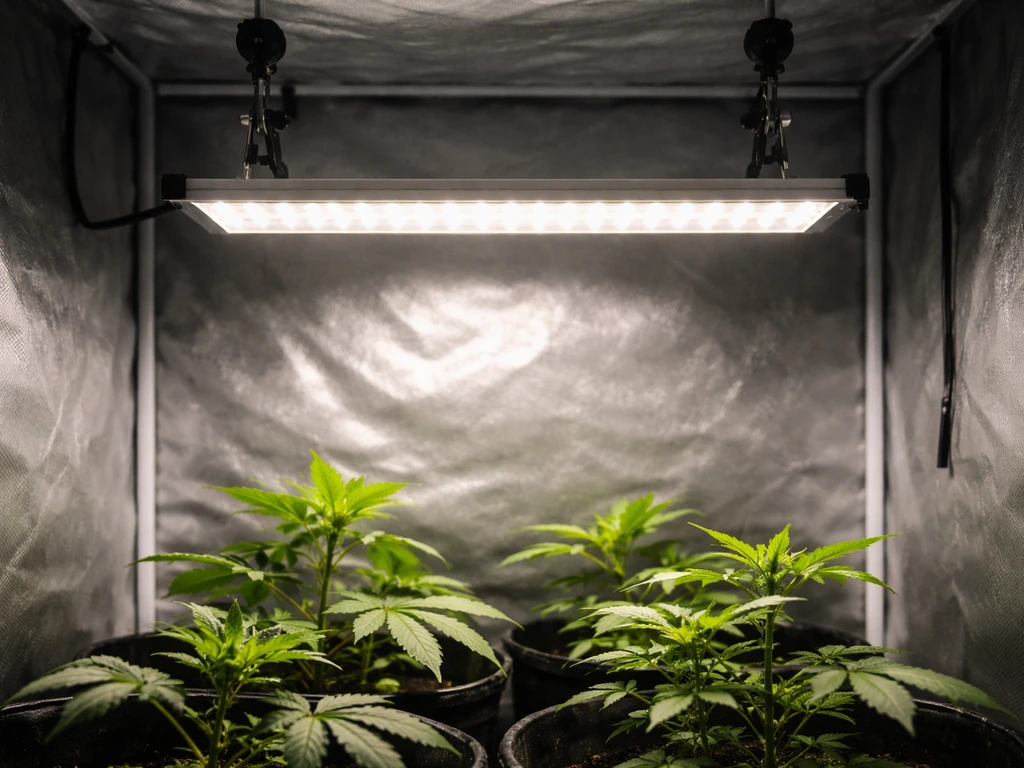
Light dep is just a shorthand for light deprivation: you control how much uninterrupted darkness your plants receive each day to trigger (or hold back) flowering. If you are trying to save money, you can also use normal LED lights as grow lights, but you still need the right dark window and coverage how to use normal led lights as grow lights.
How to Grow Light Dep Indoors Step-by-Step Guide
Marcus Tillman
20 Apr 2026
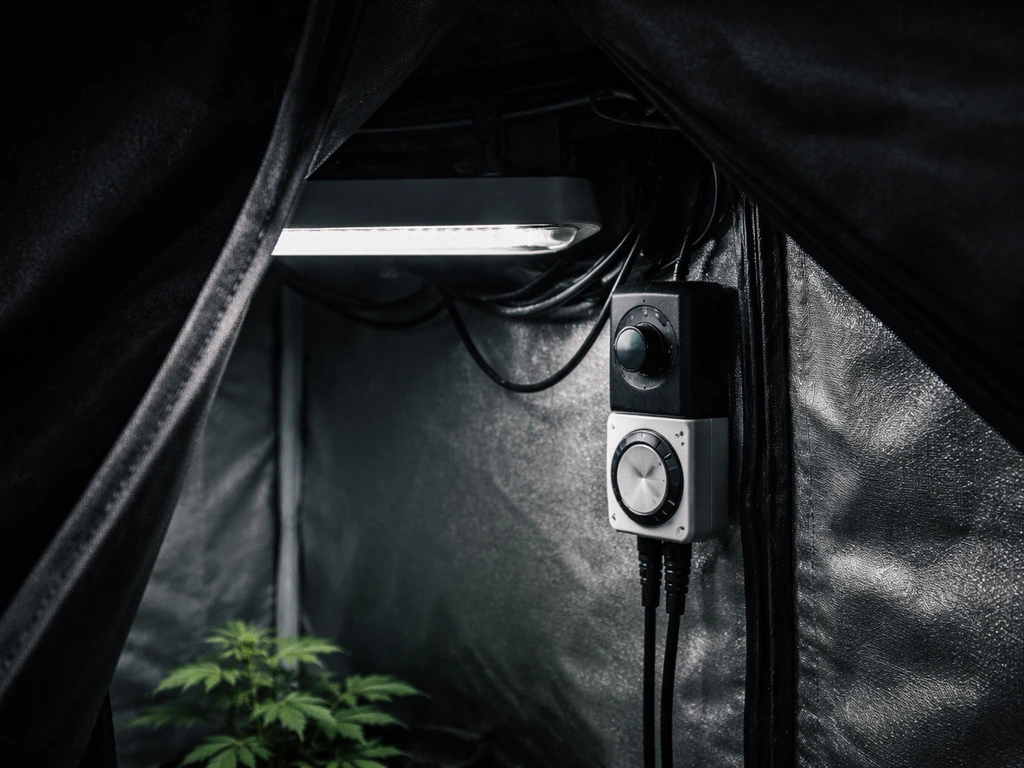
If you are also looking to cut costs, you can combine light dep with the savings from how to get free led grow lights while still prioritizing uninterrupted darkness and proper coverage. That's it. The technique works because photoperiod-sensitive plants don't actually count light hours. They count dark hours.
Get the darkness window right, and you can flip a plant from vegetative growth into flowering on your schedule, not the season's.
What "light dep" means and when you should use it
Inside your plant, a pigment called phytochrome exists in two forms: Pr (inactive, builds up in darkness) and Pfr (active, produced when red light hits the plant). During the night, Pfr slowly converts back to Pr through a process called dark reversion. If the dark period is long enough and completely uninterrupted, the balance shifts far enough to send a flowering signal. If you crack a light on for even a few minutes during that window, you reset the clock. That's the entire biology in one paragraph.
Short-day plants (like cannabis, chrysanthemum, and poinsettia) need a long uninterrupted dark period to flower. For most cannabis strains, the trigger is 12 hours of darkness per 24-hour cycle. Long-day plants flower when darkness stays shorter than their critical threshold, often somewhere between 8 and 15 hours depending on the variety. If you're growing photoperiod-sensitive plants indoors and you want to control when they flower, light dep is how you do it. If you're growing autoflowering plants, skip this entirely. Autos flower on age, not light schedules.
The most common reason someone searches for light dep is cannabis, but the same logic applies to strawberries, chrysanthemums, tomatoes (certain varieties), and any ornamental that growers force into bloom off-season. The techniques below work across all of them.
Picking the right setup: grow space, blackout method, and safety
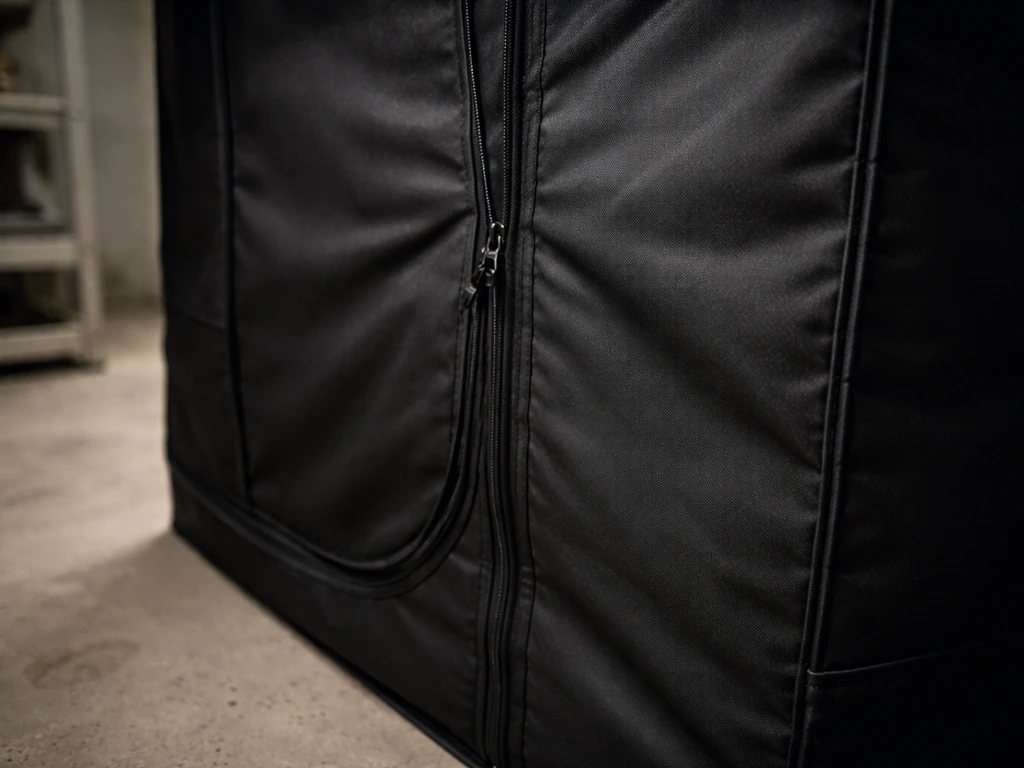
Your first job is choosing how you'll block the light. There are three practical options for indoor growers: a sealed grow tent with a reliable zipper, a dedicated grow room with blacked-out walls and sealed door gaps, or a blackout curtain/tarp system dividing a larger space. Each has real trade-offs.
| Method | Light-Tightness | Airflow Impact | Cost | Best For |
|---|---|---|---|---|
| Sealed grow tent | High (with zipper checks) | Moderate (needs inline fan) | Low-medium ($60–$300) | Beginners, small spaces, 1–4 plants |
| Dedicated blacked-out room | Very high (if sealed properly) | Low impact (room already ventilated) | Medium-high (build-out cost) | Serious growers, large canopies |
| Blackout curtain/tarp divider | Variable (leak-prone at edges) | High impact (reduces air exchange) | Low ($20–$100) | Temporary setups, greenhouse growers |
For most home growers starting out, a quality grow tent is the right call. Brands like AC Infinity, Vivosun, or Mars Hydro make tents with double-stitched light-proof zippers and reflective interiors. Size your tent to your plant count: a 4x4 foot tent handles 4 medium photoperiod plants comfortably. A 2x4 works for 2 plants. Don't overcrowd. Airflow problems multiply fast when you add blackout conditions on top of a packed canopy.
If you're using a blackout curtain or tarp system, the material matters. Fabric that reflects light on one side and absorbs on the other is the standard commercial choice. The reflecting side faces outward to reduce heat absorption, while the dark absorbing side faces the plants. Make sure every edge is pinned, weighted, or taped down. Gaps at the floor and ceiling are where most leaks happen.
Safety note: when you seal a space with blackout materials, you reduce passive airflow significantly. Heat and humidity can spike fast, especially under HPS or high-wattage LED setups. Always run an inline exhaust fan pulling hot air out and a passive or active intake bringing fresh air in. If temperatures inside climb above 85 degrees Fahrenheit during the light period, your plants will stress regardless of your schedule. Install a thermometer and humidity gauge inside the space before you commit to a full light-dep run.
Light placement and coverage for even canopy results
Light dep doesn't change how you hang your lights. It changes when they run. But placement still determines whether your canopy flowers evenly or whether you end up with dense tops and airy, underdeveloped lowers. Get placement right first, then schedule the dark window.
For LED panels, the general hanging height during vegetative growth is 18 to 24 inches above the canopy. When you flip to a 12/12 schedule to trigger flowering, you can bring the light down to 12 to 18 inches above the tops, since plants grow more slowly and need higher intensity at the canopy level to produce dense flowers. If you are also trying to source grow lights safely and efficiently, focus on matching wattage, coverage area, and a reliable timer setup. Check your specific light manufacturer's recommendations because LED footprints vary significantly between brands and wattages.
Coverage uniformity is the thing most beginners underestimate. A single 600W LED panel does not cover a 5x5 foot space evenly. The center of the footprint always gets more intensity than the corners. For a 4x4 tent, one well-designed 600W board-style LED or two 300W panels in a dual-bar configuration gives you much better edge-to-edge coverage. Use a PAR meter app on your phone (like Photone) to check light levels at multiple canopy points. You want readings within about 20 percent of each other across the surface. If your corners are getting 400 PPFD and your center is hitting 900 PPFD, your outer plants will lag behind in flowering response.
Reflective tent walls do a real job here. Mylar or white-coated walls bounce side light back into the canopy. If you're building a dedicated room, paint the walls flat white or hang emergency mylar blankets. Avoid glossy paint: it creates hot spots rather than diffusing light evenly.
Scheduling: timing windows, uninterrupted darkness, and timer setup
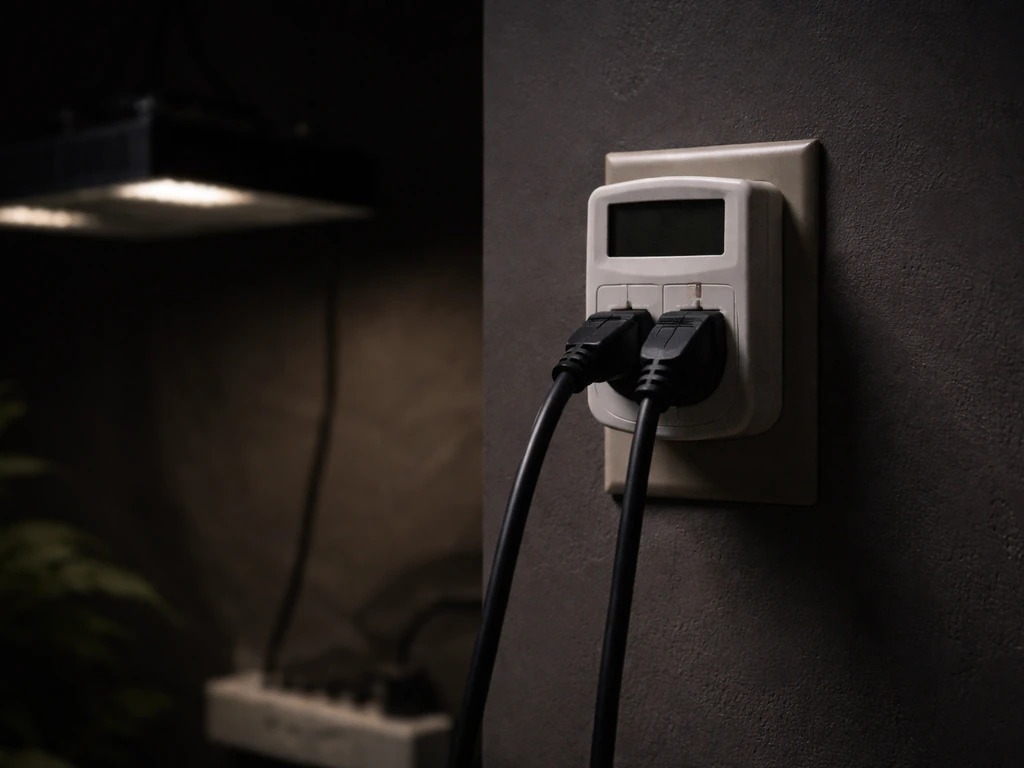
The schedule is the core of light dep, and this is where most people either get it right immediately or keep making the same mistake for weeks without understanding why their plants aren't responding.
For short-day plants like cannabis, the standard trigger schedule is 12 hours of light followed by 12 hours of complete, uninterrupted darkness. The 12 dark hours must be genuinely uninterrupted. blank" rel="noopener noreferrer">Even a 60-second light exposure during hour 10 of darkness can reset the phytochrome balance enough to delay or prevent the flowering signal. An interruption (a flash) during the dark period can convert phytochrome toward Pfr and suppress flowering in short-day plants, so continuous uninterrupted darkness is required to initiate flowering responses. This isn't paranoia. It's the biology.
Set your timer so the dark period runs during hours when no one is entering the space. The most practical approach for most growers: lights ON from 6 AM to 6 PM, lights OFF from 6 PM to 6 AM. You can inspect plants in the morning before the dark window, and you're not tempted to peek at midnight. Some growers flip this and run lights overnight to reduce daytime heat, which works fine as long as the schedule stays consistent.
Use a mechanical or digital timer rated for the wattage of your lights. Mechanical timers are reliable and cheap but can drift by a few minutes over weeks. Digital timers with battery backup are better because a power blip won't reset them to a random state. For serious setups, an environmental controller that manages lights, fans, and humidity together is worth the investment. Products like the Inkbird IHC-200 or AC Infinity's controllers can handle this without getting complicated.
Once you start the 12/12 schedule, keep it locked in. Inconsistency in the dark window (sometimes 11 hours, sometimes 13 hours) confuses the plant's circadian system and can slow the flowering transition or cause incomplete flowering. Pick a schedule and stick to it for the full cycle.
Managing intensity, stress, and plant health during deprivation
Switching to a 12/12 schedule doesn't mean you cut light intensity. During the light period, your plants still need enough PAR to photosynthesize and build the flowers you're triggering. For most flowering photoperiod plants, target 600 to 900 PPFD at the canopy during the light window. Dropping intensity too low during flowering leads to airy, underdeveloped buds even if the schedule is perfect.
What you do want to manage is the transition between your light and dark periods. A hard on/off switch (full intensity to zero instantly) is fine for most plants, but some growers use a dimming ramp of 15 to 30 minutes at the start and end of the light period to mimic sunrise and sunset. Modern LED drivers with dimming capability make this easy. The Lumatek controllers, for example, allow you to program gradual intensity changes around your on/off schedule. This isn't strictly necessary, but it does reduce abrupt phytochrome shifts and can contribute to calmer, less stressed plant behavior.
Watch for stretch in the first two weeks after flipping to 12/12. Photoperiod plants (cannabis especially) often stretch 50 to 100 percent of their height in the first two weeks of flowering. If your lights are too far away at this point, plants stretch even further toward the light source, creating long internodal spacing and poor flower density. Lower your lights progressively during this stretch phase to keep the canopy within the ideal distance.
Heat stress is more likely during light dep runs because you've added blackout materials that restrict airflow. Keep the light-period temperature between 70 and 82 degrees Fahrenheit. During the dark period, temperatures can drop to 60 to 65 degrees Fahrenheit without problems. A temperature swing greater than 15 degrees between light and dark periods can stress plants, so monitor both and adjust your heating or cooling accordingly.
Humidity management matters more during blackout conditions. When you seal a tent or close off a curtained space, transpiration moisture has nowhere to go. Aim for 40 to 60 percent relative humidity during the flowering phase. Above 70 percent for extended periods, especially with dense flower clusters, invites mold. A small dehumidifier or a properly sized exhaust fan pulling humid air out and replacing it with drier room air usually handles this.
Troubleshooting why light-dep isn't working
If your plants aren't transitioning to flowering after two to three weeks on a 12/12 schedule, or if you're seeing hermaphroditism, bleaching, or uneven development, here's how to diagnose what's going wrong. Once you know what to measure, you can also learn how to become a grow light tester to verify intensity and coverage accurately before you start a long light-dep run.
Plants won't switch to flowering
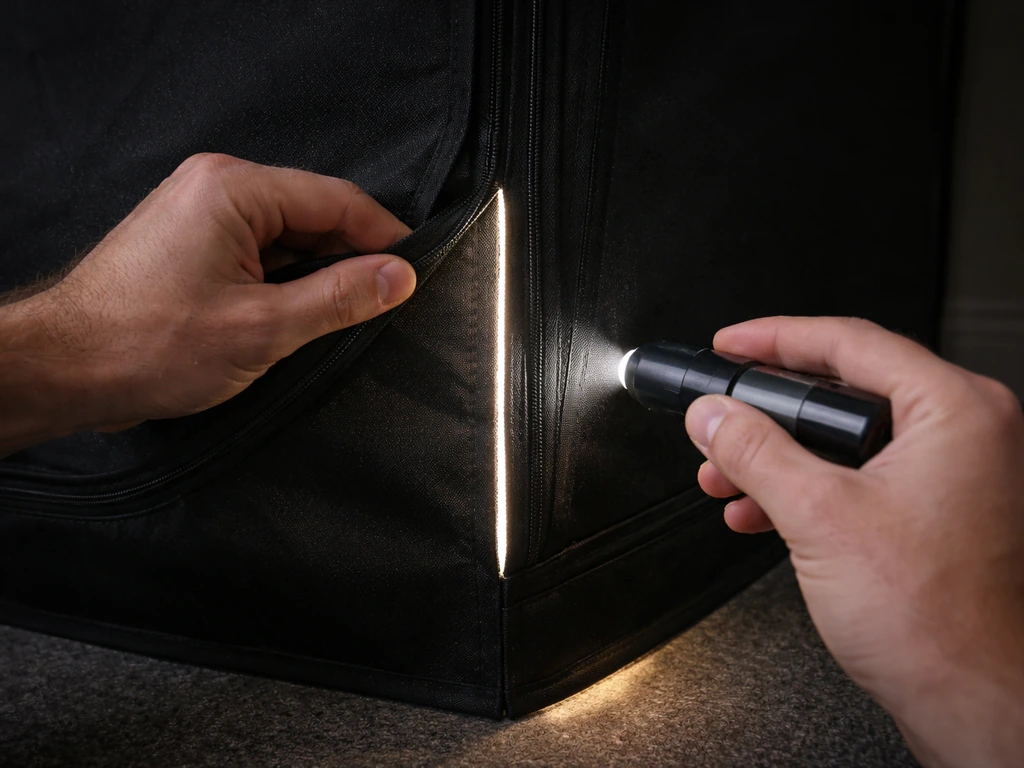
The most common cause is a light leak. Even a thin line of light under a door or a small hole in tent fabric can provide enough red-spectrum light to reset the phytochrome response and prevent flowering. Do the flashlight test: turn off all lights in the space, close everything up as you would during the dark period, get inside, and let your eyes adjust for five full minutes. Any light you can see is a leak. Common culprits are zipper gaps, fan cord pass-throughs, ventilation intake holes, and door frames. Seal them with black duct tape, light-proof cord covers, or foam weatherstripping.
A second cause is timer failure. Check that your timer is actually cutting power to the lights at the correct time, not just the display. Some mechanical timers stick. Verify by watching the lights go out at the scheduled time for three consecutive nights.
Hermaphrodite flowers appearing
Light leaks during the dark period are the number one environmental trigger for hermaphroditism in cannabis. The plant perceives the interrupted darkness as a stressful, unpredictable light environment and hedges its reproductive bet by producing both male and female flowers. If you spot banana-shaped stamens emerging from otherwise female flowers, do an immediate light leak audit. Fix every gap. Then assess whether the stress has spread far enough to contaminate other plants (pollen is airborne). If bananas are isolated to a few sites, you can remove them carefully with tweezers and complete the run, but watch those plants daily.
Excessive stretching or bleaching
Extreme stretch usually means lights are too far away during the first weeks of flowering. Bring them closer in 2-inch increments over several days and watch for signs of heat stress (leaf curl, yellowing tips) before going further. Bleaching, where the tops of colas turn white or pale yellow, is the opposite problem: lights are too close or too intense for the canopy distance. Raise the fixture until the bleaching stops and new growth comes in green.
Uneven canopy flowering
If outer plants are lagging behind center plants in flowering development, the issue is light distribution. Use your PAR app to map the canopy. Add a second light, reposition fixtures, or use low-stress training to spread the canopy out so every part of it sits at roughly the same distance from the light source. Plants that receive less than 400 PPFD consistently during the flowering window will produce noticeably less than their neighbors, even on an identical schedule.
Heat and humidity spikes during the dark period
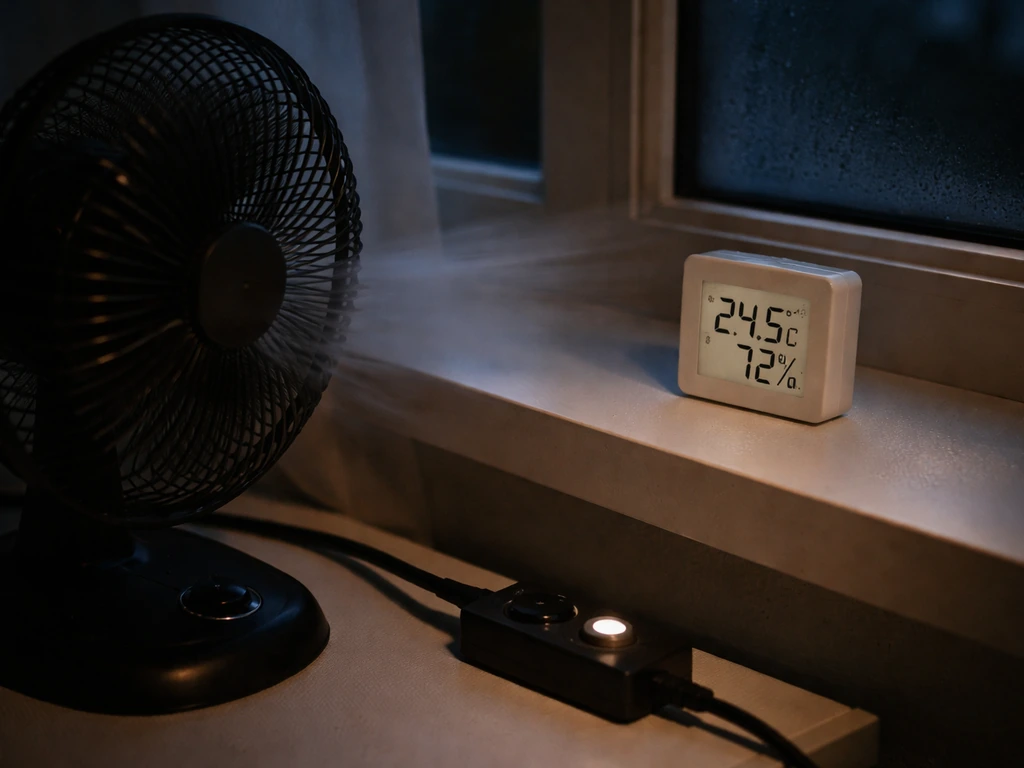
When your lights go off, your fan speed may drop (especially if you're using a fan speed controller tied to temperature). But humidity can actually climb during the dark period as the canopy continues to transpire without the heat from lights to evaporate moisture. Keep your exhaust fan running at a baseline speed through the dark period, not zero. A setting of 30 to 40 percent of max speed is usually enough to manage humidity without creating a large temperature drop.
Quick-start checklist and verification steps before committing
Before you flip your plants to a flowering schedule, run through this checklist. It takes about an hour and will prevent the most common failures that waste an entire grow cycle.
- Seal the space: close every zipper, port, and gap. Do the 5-minute dark eye-adjust test inside with the lights off. Fix any visible light with black tape or foam.
- Verify the timer: plug in your light timer, set the schedule, and watch the lights cut at the exact scheduled time for at least two cycles before flipping your plants.
- Test backup power: if you're using a digital timer, confirm the battery backup is functional so a power blip won't reset your schedule mid-cycle.
- Check canopy coverage: use a PAR meter app at the corners, edges, and center of your canopy. Adjust light height or add a second fixture if the spread is uneven by more than 20 percent.
- Measure temperature and humidity during both the light and dark periods. Run a 24-hour test with your thermometer and humidity gauge before introducing plants to the schedule.
- Confirm exhaust fan is running during the dark period: set it to at least 30 percent speed to maintain airflow even when lights are off.
- Check the blackout material itself: press a phone flashlight at maximum brightness against the fabric from the outside. If you can see light coming through from inside the tent or room, the material is not adequate.
- Post your schedule where you can see it: write down lights-on and lights-off times somewhere visible so you (or anyone else who might enter the space) doesn't accidentally open the tent during the dark window.
- Set a weekly reminder to inspect zipper seals, tape patches, and vent covers for gaps. Materials shift and tape loosens over a 10-to-12-week flowering cycle.
- Note the flip date: write down the first day you switched to 12/12. Most short-day plants show clear flowering signs within 7 to 14 days. If you see nothing at day 21, that's your cue to recheck for light leaks.
Getting light dep dialed in is genuinely not complicated once you understand that the plant is responding to darkness, not light. The setup work is mostly about creating a reliable, repeatable dark window and keeping your environment stable around it. Nail those two things and the plant does the rest.
If you're also thinking about your overall grow room setup or comparing LED options for your light-dep run, the guidance on how to set up a grow room with LED lights or how to grow with LED specifically covers the hardware side in more detail and pairs well with what you've learned here.
If you are trying to dial in led-specific conditions, the key is matching intensity and coverage to your 12/12 schedule so the dark window can do its job. When you’re trying to dial in led-specific conditions for light dep, you may also want to check the practical steps in how to get grow lights once human as a quick adjacent option for sourcing and setup.
FAQ
Does light dep work for autoflowering plants?
No. Light dep only works for photoperiod-sensitive plants because they use the dark period length to trigger flowering. If you grow autoflowers, switching to 12/12 will not reliably force flowering and can reduce final yield by stressing plants without benefit.
What should I do if I need to check plants during the dark period?
Aim for a truly uninterrupted dark block, not just “lights off.” If you need to open the tent, do it during the light period. If you must enter during darkness, use red lighting outside the sealed area and keep the plant room sealed until you can fully restore darkness.
Is it okay to use dimming or sunrise sunset ramps on the lights?
Usually, dimming or ramping during the light period is fine as long as the schedule still includes the full uninterrupted dark window. The critical part is what happens during darkness, not small intensity changes while lights are on.
How can I tell if my timer is actually cutting power correctly?
Not automatically. A timer with the correct display can still fail mechanically, or power can cycle without you noticing, especially during storms. Verify by confirming the lights actually turn off at the same time for several nights in a row, ideally with an independent monitor or controller.
Should my exhaust fan stop during the dark window?
Some managers keep exhaust running during darkness to control humidity, but the key is avoiding a temperature collapse. If your dark-period temperature drops too low or swings more than about 15°F compared with the light period, flowering transition and structure can slow.
My plants are not switching after 2 to 3 weeks, what should I troubleshoot first?
If your plants are only stalling, don’t change both schedule and light intensity at once. First perform a light leak audit, then confirm the timer and blackout integrity. Only after those checks, adjust intensity or fixture height if PPFD at the canopy is under target.
Can I use a phone flashlight or dim room light to inspect during darkness?
Yes, if it causes light interruptions. Even brief “peek” moments can reset the dark-reversion clock. If you want to inspect at a specific time, schedule the on-cycle so your visits happen during light.
How do power outages or controller resets affect light dep?
Inconsistent “dark hours” is a common failure even when the grower thinks the schedule is right. A simple slip can happen after power outages, timer battery loss, or controller resets, so use timers with battery backup or controllers that maintain state.
Why do some light dep runs fail even when the schedule is perfect?
Many growers keep the tent closed and rely on sealed passive intakes with controlled exhaust. If you cannot maintain stable airflow due to blackout materials, you may get heat or humidity spikes that look like light-dep problems but are actually environment problems.
How do I confirm my LED setup covers the whole canopy evenly?
Don’t rely on tent size alone. Coverage depends on LED footprint, reflector design, and spacing. Use a PPFD measurement method to map the canopy and adjust fixture count or position until center-to-corner readings stay within about 20% of each other during the light window.
Should I move plants or change light placement after I start 12/12?
Not at first. If you want consistent flowering, avoid rearranging fixtures or rotating plants during the dark window. If you must reposition, do it during the light period and keep the dark block uninterrupted for the whole cycle afterward.
How do I distinguish light stress from heat stress when troubleshooting?
Yes, but define what you mean by “bleaching.” Pale, white tops usually indicate too much intensity at the canopy, often from fixtures being too close or PPFD overshooting. Raise the light and re-check with a PPFD readout, then wait for new growth to come in green.
If I see hermaphroditism, should I assume genetics or check for light leaks?
Hermaphroditism can have multiple triggers, but light leaks during darkness are a major one for photoperiod plants. If you see banana-shaped stamens, immediately redo the flashlight leak test, then isolate and monitor the affected spots because airborne pollen can spread.
If I reduce intensity during flowering, will light dep still work?
Generally no. When the light schedule is correct, most plants still need the same photosynthesis during the light period to build flowers. If you lower intensity too much, you can get airy buds even though the plant “responds” to 12/12.
Next Article
Innova Grow Light Instructions: Setup, Use, and Troubleshooting
Step-by-step Innova LED grow light instructions: setup, mounting, distance, schedules, intensity, and fast troubleshooti